Garage Door Openers Explained: Trolley, Hoist, myQ and Lost Remotes
Your opener is the part of the door you touch every day, so it helps to know what kind you have and what it can do.
October 7, 2026 · 4 min read
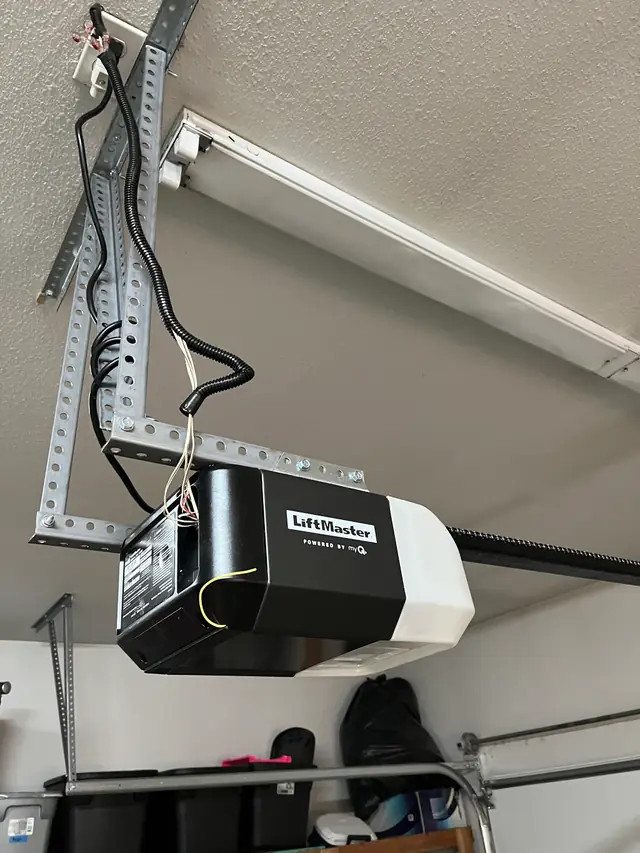
Garage door openers have changed a lot. A small box on the ceiling used to do one thing: open and close the door when you pressed a button. Today the same box can send your phone an alert, accept a keypad code from your kids, and report its own errors. This guide covers the two main kinds of operators, what the myQ app adds, and what to do when a remote goes missing.
What the opener does and doesn't do
First, a point that surprises people. The opener doesn't hold the weight of the door. The springs do that. The opener moves a balanced door along its tracks, and it has safety features that stop and reverse the door when something is in the way. If a door is out of balance or a spring is broken, the opener works too hard and eventually fails. So when an opener seems to be dying, a technician often finds the real problem is in the door itself, which is why a good service call looks at both.
Trolley operators
A trolley operator is what most homeowners picture. A motor unit hangs from the ceiling, a rail runs out toward the door, and a trolley rides along that rail, pulling the door open through an arm attached to the top section. SCI Door describes its trolley-controlled operators as made for sectional doors, with smooth, efficient operation for both commercial and residential use. They're a good fit wherever the door opens and closes often, such as a large garage, a warehouse or a storage facility.
On homes, the drive that moves the trolley is either a chain, a belt or a screw. Chain drives are common and sturdy. Belt drives run quieter, which matters if a bedroom is above the garage. SCI Door installs LiftMaster openers, and a typical home setup is a belt-drive unit mounted on a ceiling angle with its wiring run down to the wall button.
Hoist operators
Trolley and hoist operators are the two common ways to automate an overhead door. A hoist operator sits beside the door rather than on a rail overhead, and it turns the door's shaft or drum through a chain or gear. That layout frees up the ceiling and works well where headroom is tight or the door is heavy or tall, which is why you see hoist operators on many commercial doors, rolling doors and some specialty installations. If you're not sure which kind your building needs, a technician can look at the door, the headroom and how many times a day it cycles.
myQ: the app side of the opener
SCI Door is a LiftMaster dealer and is listed on LiftMaster's own dealer locator as a registered myQ Diagnostics dealer. myQ is LiftMaster's connected technology. Per SCI Door's operators page, you can open the door from anywhere using a smartphone, tablet or computer, and the system can detect errors in the operator and offer a troubleshooting option right on your screen.
- Open or close the door from your phone when you're away from home.
- Check the door's status without walking out to the garage.
- See error information that points toward the cause when the opener acts up.
Keypads and remotes
A wireless keypad mounts on the door jamb outside the garage and lets anyone with the code open the door. Parents like them for kids who forget keys, and people with dogs to walk like them for quick trips. One SCI Door customer wrote that the keypad added to the new installation was convenient for everyone, especially his two boys. Remotes work from the car or clipped to the visor, and most modern openers can hold several of them.
When a remote is lost or stolen
A remote left in a car is a real security issue, because it opens the garage and the garage often leads into the house. If a remote is lost or stolen, the fix is to clear the old remotes from the opener's memory and program fresh ones, so the missing remote no longer works. Most openers have a learn button on the motor unit for exactly this. The steps vary by brand and by model, and it can be a fussy process if you've never done it.
One local customer's remote was stolen from her car while she was traveling. She bought replacements but couldn't get them to program, so she called SCI Door. A technician came out the same day and had both openers programmed within a few minutes. That kind of call is quick work for someone who knows the model, and you walk away with a clean setup.
Signs your opener is the problem
- The motor runs but the door doesn't move, or it stops partway and reverses.
- The door works from the wall button but not the remote, or the other way around.
- The opener is louder, jerks, or shakes the ceiling.
- The light stays on or blinks, or the safety sensors keep tripping.
A word on safety: the sensors near the floor on either side of the door are there to protect people, pets and cars. Don't bypass them to quiet a nuisance reversal. Have a technician align them or replace them.
Your next step
If you need an opener replaced, a keypad added, a lost remote cleared, or a myQ setup explained, call SCI Door at (509) 575-7955 or stop by the shop at 1118 N 6th Ave, Yakima. The team serves Yakima, Selah, Naches, Moxee, Wapato, Union Gap and the rest of the valley, Monday through Thursday from 8:00 AM to 4:30 PM and Friday from 8:00 AM to 4:00 PM.
SCI Door, (509) 575-7955
Call (509) 575-7955More articles
Broken Garage Door Spring: What to Do When the Door Won't Lift
A broken spring is one of the most common garage door failures in the Yakima Valley, and one of the few that can hurt you if you guess.
Choosing a New Garage Door in the Yakima Valley: Carriage House, Raised Panel or Full View Glass
The door is often the largest thing on the front of your house, so it's worth knowing the real differences before you pick one.