Commercial Overhead Doors for Shops, Warehouses and Ag Buildings
A commercial door that opens fifty times a day has a very different life from a home garage door, and it should be chosen that way.
October 7, 2026 · 4 min read
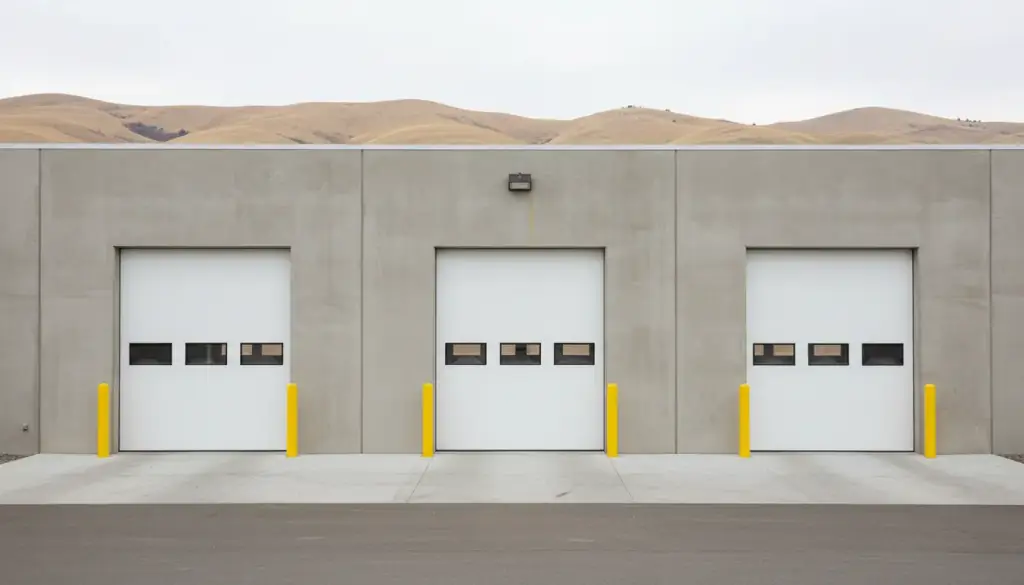
In the Yakima Valley, a lot of work happens behind overhead doors: loading docks at warehouses, shop bays, equipment sheds on farms and orchards, storage buildings, and fabrication shops. The door on a place like that does more than keep weather out. It controls security, traffic, heat and dust, and when it fails the whole day slows down. Here's how the main commercial door types compare and how to keep them working.
Start with how the door will be used
The most useful question when choosing a commercial door isn't what it looks like. It's how often it will cycle and what it needs to do. A door that opens twice a day to move a truck is a different job from a door that opens every few minutes during a shift. Opening width, ceiling height, the weather your building sees, what you're protecting and whether forklifts or equipment pass through all steer the choice. This is why SCI Door's commercial services begin with a consultation before anything is ordered.
Sectional doors
A sectional door is made of hinged horizontal panels that roll up along tracks and rest overhead. It's the most common commercial choice, and it looks like the residential doors people know, only larger and heavier. Sectionals can be insulated for conditioned spaces, fitted with windows for daylight, and built tall and wide for trucks. They seal well against weather, which makes them a good choice for shops and warehouses where temperature and dust matter. They need headroom for the tracks, so that's one of the first things to measure.
Rolling curtain doors
A rolling curtain door has a flexible curtain of interlocking steel slats that winds around a barrel above the opening. Because it coils tightly, it fits where there isn't much headroom, and it's valued for security on storage buildings, loading bays and utility openings. A rolling door doesn't give the same insulation and sealing as an insulated sectional, but for a building where durability and a small footprint matter more than temperature control, it's a practical choice.
High-speed doors
High-speed doors are built for openings that cycle all day. They move quickly, which cuts the time the opening is exposed, and that helps with traffic flow, dust and temperature in busy facilities. If forklifts or vehicles pass through many times an hour, a slow door becomes a bottleneck, and the time it costs adds up. High-speed doors aren't for every building, but where traffic is constant they can pay their way through smoother work.
Operators for commercial doors
SCI Door installs both trolley and hoist operators. Trolley operators suit sectional doors and are described as well suited to environments where the door must open and close frequently, such as a large garage, warehouse or storage facility. A hoist operator mounts beside the door and drives the shaft or drum, which suits rolling doors and openings where overhead space is tight. SCI Door is also a LiftMaster dealer and a registered myQ Diagnostics dealer, so connected access and error reporting are options for a business that wants to check door status remotely.
Agricultural buildings have their own demands
Equipment barns, packing and storage buildings and farm shops put doors through things a city warehouse doesn't see: wide openings for implements, dust and chaff, mud, wind, and doors that may sit open for hours and then run a dozen times in an afternoon. SCI Door works with residential, commercial and agricultural customers throughout the Yakima area, including Sunnyside, Grandview, Mabton and Toppenish. When you describe the building, mention the equipment that passes through, the opening size and whether the door needs to be insulated, because those details drive the choice.
Keeping high-cycle doors running
A door that cycles constantly wears its parts faster, so the maintenance schedule should follow the usage, not the calendar alone. Springs have a rated number of cycles, and a commercial door can reach that number years sooner than a home door. Rollers, hinges, cables and operators wear in step. A yearly service is the minimum for residential doors, and a busy commercial door often deserves attention more often.
- Have springs, cables, rollers, hinges and tracks inspected on a set schedule, not only when something breaks.
- Keep the track area clear of debris, ice and dirt, and keep forklift traffic from clipping the bottom section.
- Report damaged panels early. A bent section strains the tracks and the operator.
- Test safety sensors and edges regularly, since a door that closes on people or vehicles is a serious hazard.
- Notice changes in sound, speed or how the door tracks, and call before a small issue shuts the opening down.
Planning a larger job
For bigger commercial projects, SCI Door says it can discuss financing options or phased work during the estimate. That can help a business spread out a project across several doors or several seasons instead of tackling all of it at once. Bring a list of the openings, how each one is used and which ones cause the most trouble, and you'll get more out of the conversation.
Your next step
If you're planning a new or replacement commercial door, SCI Door provides free estimates on new installation and replacement. Call (509) 575-7955 or visit the shop at 1118 N 6th Ave, Yakima, Monday through Thursday from 8:00 AM to 4:30 PM or Friday from 8:00 AM to 4:00 PM. SCI Door has been licensed in Washington since 1998 and works with shops, warehouses and agricultural buildings from Yakima to Union Gap, Wapato and beyond.
SCI Door, (509) 575-7955
Call (509) 575-7955More articles
Broken Garage Door Spring: What to Do When the Door Won't Lift
A broken spring is one of the most common garage door failures in the Yakima Valley, and one of the few that can hurt you if you guess.
Choosing a New Garage Door in the Yakima Valley: Carriage House, Raised Panel or Full View Glass
The door is often the largest thing on the front of your house, so it's worth knowing the real differences before you pick one.